
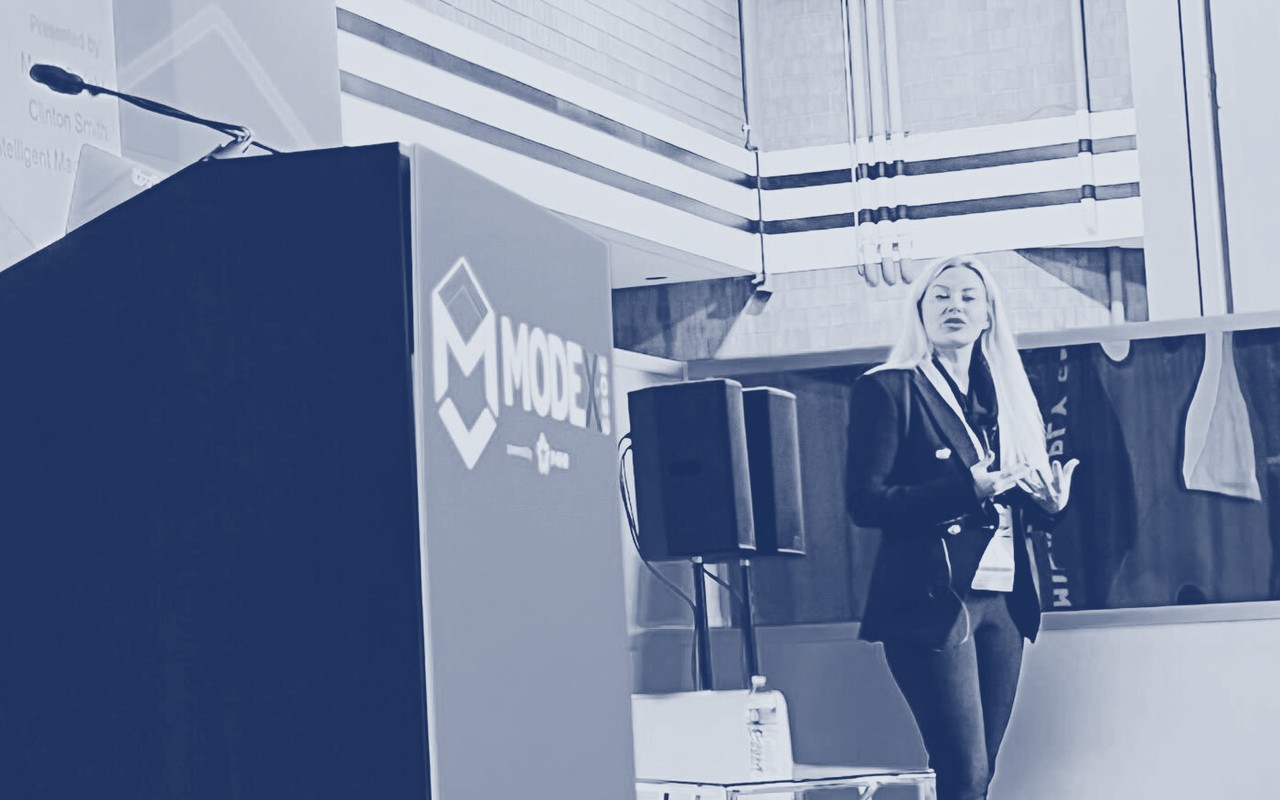
One conference talk can fill a quarter of content because the hard work is finished before you start. Someone at your company has organized 30 minutes of expert thinking, the organization has approved the slides, and a room of potential buyers has reacted to it out loud. What turns that into three months of posts, clips, articles, and sales follow-up is a plan that starts weeks before the talk and keeps going after the booth is packed up.
Most companies treat the talk as the deliverable instead of the source material
That's why most talks produce a single recap post. Nobody arranged a recording, so there's nothing to clip. Nobody wrote down the audience questions, so the most useful part of the session walks out the door with the attendees. And by the time the team is back in the office, the next show is on the calendar, and the talk already feels old.
That's an expensive habit, because the people in that audience are buyers in the middle of their research. The 2026 Intralogistics Robotics Study from Peerless Research Group found that among companies planning their first robotics initiative, 47% haven't moved past the earliest stage: gathering information and building internal knowledge. Those buyers aren't ready to talk to sales yet, but they are ready to watch a clip, read an article, and save a carousel. Plan the content before you finalize the slides, and the same 30 minutes keeps working for you through the months they spend making up their minds.
The speaker you put on stage decides who the content is for
Match the speaker to the room before you plan anything else, because every piece of content you produce afterward inherits that choice. A technical A3 conference draws engineers who want architecture, integration detail, and performance under real operating conditions, so that's a stage for your CTO or VP of Engineering. A show like MODEX draws end users looking for a solution to buy, and most of them aren't there to hear about your perception stack. Put your COO or another business leader in front of that crowd to talk about the business model, the deployment, and the investment returns. Get the match wrong, and you'll waste three months publishing content for the wrong audience.
The speaker is also one of your best distribution channels. Their network reaches buyers the company page doesn't, so ask them to promote the talk before the show and share pieces of it afterward. An engineering leader may have a small LinkedIn presence and little interest in posting, while a COO may already have a following among operations buyers. Find out which one you're working with before the show, so you know whether to draft posts for the speaker or carry more of the load on the company page.
Before the talk: build the audience and lock down the recording
The weeks before the show decide how much content the talk can eventually produce. Four things belong on the list:
The speaker announcement. Name the speaker, the session, and the time. Lead with what the audience will learn. A post about landing a speaking slot is about you; a post about what they'll learn is about them.
A post built around the question the talk answers. Every good talk answers one question a buyer is already asking. Publish that question before the show with a partial answer. It tests the argument in public and gives attendees a reason to find your session on a crowded schedule.
Sales invitations to accounts that are attending. Your reps know which prospects and customers will be at the show. A personal note from the rep with the session time and one reason to come will fill more seats than any post.
Confirmation of who is recording, and whether the event allows it. This is the item that most often gets skipped, and it decides whether the rest of the plan is possible.
Who is recording the talk, and what will it cost?
Ask the organizer whether your session will be recorded, and by whom, before you build a content plan around footage you may not get. Some events record every session and send the files to speakers. Some don't record at all. Others restrict recording to their own AV team and charge speakers for the file; at least one of the major material handling shows works this way.
Here's one thing to keep in mind when planning and budgeting for a talk at a show: get the answers in writing. Find out what's recorded, who owns the file, when you'll receive it, and what it costs. If the event won't allow outside cameras and the recording is outside your budget, you need to know that early enough to plan around photos, slides, and notes instead. Ask too late, and the recording becomes either a cost nobody budgeted for or a file you never get.
During the talk: the audience questions are the most valuable thing in the room
Assign one person to capture the session, and give them three jobs. Get the recording running, whether it's yours or the event's. Take photos of the speaker, the slides, and the audience, because a photo of a full room shows buyers wanted to hear what you had to say. And write down every audience question as close to word for word as possible, with the asker's title or company if they offer it.
The questions matter most because they're the one part of the talk you can't get anywhere else. Gartner's research on B2B buying found that buyers spend about 17% of their total purchase journey meeting with potential suppliers, and that time is split across every vendor on their list. A Q&A is one of the rare moments when a plant manager or DC director tells a vendor, unprompted and in public, what's holding them back.
That makes every question free buyer research. In the same Peerless study, buyers ranked ROI (63%), payback time (52%), and total cost of ownership (47%) as their top decision criteria. If the questions at your session sound like those, you've just heard the objections your reps will face in the deals that follow. Write each one down, because each one is a future post, an FAQ entry, and a line in your sales team's objection handling.
After the talk: publish the quick pieces while the show is fresh
The order you publish in matters as much as what you publish. The quick pieces should go out while the show is still fresh in buyers' minds, with longer pieces following over the next few weeks.
- A recap post. Publish it within days of the talk, built around the strongest takeaway, a photo from the session, and the question the talk answered.
- A sales follow-up email with the recording. Reps send the recording, or a clip from it, to every account they invited and every prospect who stopped by the booth. If the official recording isn't ready, send your own footage or the slides instead of waiting.
- Short video clips. Cut the recording into short clips, each built around one claim from the talk. Each clip gets its own post, with a line of context telling the viewer who's speaking and why it matters.
- The slides as a carousel. The slides already went through your organization's approval before the talk, so turning them into a document post is mostly a design job. Rewrite the speaker's spoken points as on-slide text so the carousel stands on its own.
- An article under the speaker’s name. Write out the talk's full argument, including the details that didn't fit into the 30-minute talk, and publish it on your website or pitch it to a trade publication. This is the version buyers will find when they type the question into Google or ChatGPT long after the show.
- Posts from the speaker’s own account. This is where the speaker's network earns its keep. Draft the posts in their voice if you need to, but make sure they go out from their profile.
- An FAQ built from the audience questions. Answer every question from the session properly. It works as a website page, a run of future posts, and a reference sheet for sales.
Spread across the weeks after the show, this list fills a quarter, and none of it needs a new idea.
Three ways to waste a good talk
Posting the same recap three times. It's tempting to keep re-announcing a talk that went well, but every repeat tells your audience there's nothing new to see. Each post after the first should carry a different idea from the talk, not the same summary with a new photo.
Sharing clips with no context. A clip of your CTO mid-sentence means nothing to a VP of Operations scrolling past it. Tell the viewer who's speaking, what question they're answering, and why a buyer should care before they press play.
Waiting weeks for the event's official recording. By the time it arrives, the buyers who were in the room have moved on, and so has your sales team. Start publishing right away with your own footage, photos, and notes, and treat the official recording as an upgrade when it lands rather than the starting gun.
The buyers who weren't in the room are the bigger audience
The talk reaches the people in the seats. The content around it reaches every buyer who was walking the show floor, stuck at their own plant, or not yet researching when you took the stage. Companies rehearse the talk, review the slides, and debate who should give it, but the content rarely gets the same attention. Give it the same planning, and one session on a show floor will keep showing up in your buyers' feeds long after the show closes.
Sources
- 2026 Intralogistics Robotics Survey: Robotics moves into the mainstream — Supply Chain 24/7 / Modern Materials Handling. Peerless Research Group with MHI and The Robotics Group; 166 respondents, March–April 2026.
- 2026 Intralogistics Robotics Report — Supply Chain 24/7
- Buyer Enablement Is the Key to B2B Sales — destinationCRM, reporting Gartner research on B2B buying time.