
An after-hours trade show event works when it's planned around who's in the room rather than how many people show up. Book the venue six months out, host on the second night of the show, and keep it invite-only. Build the guest list from your pipeline, your partners, and your investors. The follow-up in the 48 hours afterward is where the night pays off.
We plan after-hours events for robotics and automation companies around the shows their buyers attend, from MODEX and ProMat to Automate and PACK EXPO. Here's the playbook we run, and why.
At MODEX 2026, the best conversations happened in the room we booked
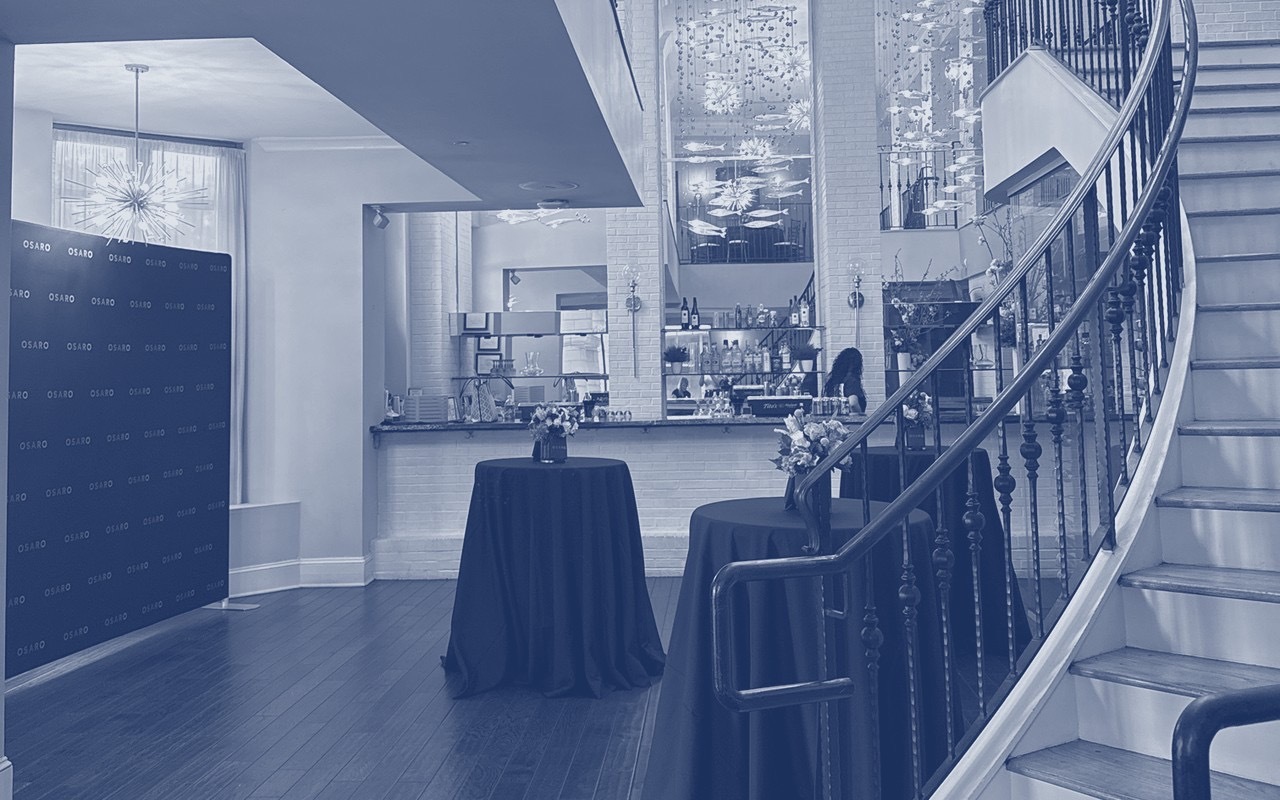
The most recent run of this play was for a physical AI company at MODEX 2026. We hosted a cocktail reception on the Tuesday night of the show for around 70 guests. The room mixed current customers, prospects still evaluating, industry partners, and friends of the company.
The night did three jobs. It kept the brand in front of buyers mid-evaluation, when it's easy to drop out of view. It gave current customers an evening that felt like appreciation rather than account management. And it put the company at the center of its corner of the industry, with partners and peers in the same room as its buyers. None of that shows up on a scorecard the next morning, which is why it's worth planning carefully.
In a long sales cycle, an after-hours event is a touchpoint, not a close
Automation decisions take a long time and pull in more than one person. In the 2026 Intralogistics Robotics Study from Peerless Research Group, 48% of companies said their robotics initiatives took seven to 12 months to go from inception to a working deployment. Another 26% took 13 to 18 months. Operations was part of the decision at 63% of companies, and corporate management at 41%. Nobody signs at a cocktail reception. The night gives you one more touchpoint across that long stretch, and one of the few that doesn't feel like selling.
That's why we tell clients to invite their champion and then ask who that champion will need to convince. The champion already believes in you. The executive or finance lead behind them usually hasn't met your team, and two relaxed hours alongside your current customers do more for that relationship than another deck. If the person who signs off on the capital spend leaves knowing your team by name, the event did its job.
The venue decides everything else, so it gets booked six months out
We begin planning six months before the show, starting by securing the venue. Rooms near the convention center go early during shows like ProMat and Automate. Wait a few weeks, and you're choosing from whatever's left, often farther from the show floor than tired guests will travel.
The room’s shape matters as much as its size. We look for space where guests can move freely: open standing areas, a few high-tops and a bar people naturally gather around. Seated tables lock people in with whoever they sat next to, and the point of hosting is getting the right people to meet.
Before committing, we review the show schedule for keynotes, receptions, and competitor events. We also confirm sponsorship rules and ensure the venue is within walking distance of the floor, arranging transportation if necessary. Each check protects turnout, the one thing you can't fix once the night starts.
The second night of the show is when your guest list is in town
On the first night of a show, many attendees are still landing. By the last night, many have already left for the airport. The second night is when your guest list is most likely to be in the same city with a free evening.
The room is the point, so keep it invite-only
We don't open these events to anyone walking the show floor. Everyone loves a free drink, but a crowded room of strangers makes real conversation nearly impossible. Your team ends up spending the night with people who were never going to buy. Keep the room to invited guests, and your team spends the night with the people they came to see.
Sales, marketing, and leadership each own part of the guest list
The guest list is the most important decision in the plan, and we build it from three directions because each group sees relationships the others can't.
Sales owns the pipeline. We ask reps to start in the CRM with open opportunities and key accounts. For each one, they answer a question: who would you most want in a room with us for two hours? Then we ask who that person needs to bring.
Marketing adds the partners. Working with your VPs, marketing identifies the technology partners, distributors, and industry contacts that sales might not think to invite. These guests make the room feel like part of the industry instead of an extension of the booth.
Leadership adds investors. If the company is raising, we ask executives which investors will be in town. A relaxed evening surrounded by customers and partners shows traction in a way a board update can't.
Invitations come from people, not from a marketing email
We have sales reps and executives send personal invitations four to six weeks before the show. A note from someone the guest knows gets a reply; a branded email blast gets filed with every other show invite. We track RSVPs and send a reminder the day before, because plans change by the hour once a show starts.
During the show, booth invites and QR codes let your team invite strong prospects they meet on the floor. It's the one exception to invite-only, and it works because your team still chooses who gets asked.
The details that keep people in the room are the ones guests remember
What we've learned on the night comes down to details, and each one of them serves one goal: keeping guests in the room long enough to have the conversation you invited them for.
Food is the biggest lever. Guests come straight off the show floor, and many skipped lunch. We plan enough food for people to make a meal of it. Passed appetizers and small-plate stations let guests eat while they talk, without needing a seat or utensils. Vegetarian and gluten-free options mean nobody leaves early to find dinner. Well-fed guests stay longer, and longer conversations are the reason you're hosting.
The room should be easy to talk in. We keep the music at background level so nobody has to raise their voice to be heard. Either a live acoustic act or a curated playlist works, but anything that turns the room into a club works against you.
Branding only needs to say who's hosting. A welcome sign at the entrance, a few touches like cocktail napkins or a step-and-repeat for photos, and a screen looping a product video are usually enough. Guests should know whose event it is without feeling like they walked into a second booth.
Every guest should be easy to find. Pre-printed name tags with company names give guests an easy opener and help your team find the people they were meant to meet. We put someone at the door to welcome guests and hand out name tags. They also check each arrival off the guest list, and that record of who actually came becomes your follow-up list.
Remarks stay short. If your CEO wants to say a few words, we keep the remarks to five minutes or less and schedule it about 45 minutes in, once most guests have arrived.
Plan for what happens after guests leave. We have someone take candid photos throughout the night, which gives you material for LinkedIn posts and follow-up emails. We always ask guests before posting a photo they're in. On the way out, a small, useful take-home item keeps your company top of mind once guests are back at their own plant or distribution center.
The follow-up is where the night pays off
We send personalized follow-ups within 48 hours, written around the conversation each guest actually had. Attendance and notes go into the CRM, tied to the opportunities they touched.
Then we measure against the goal you set before booking the venue: meetings booked, deals advanced, and relationships started. In a cycle this long, deals advance over quarters. Judge the event on its first week, and you'll undercount what it did.
If you're reading this with 90 days to go, the event is still worth doing
What should you do if the show is 90 days away?
You've missed the ideal window, but you can still run a strong event if you protect what drives the result. That means the second night, the invite-only list, and personal invitations four to six weeks out, which you're still on time for. Good food, name tags, check-in, and the 48-hour follow-up all survive a short timeline.
Cut whatever depends on lead time or square footage. The best rooms near the convention center are likely gone, so look at private dining rooms or smaller spaces a short ride away. Shrink the list to the accounts that matter most. Skip the step-and-repeat, custom giveaways, and live music; a playlist and branded napkins will do the job.
The room you control is the one buyers remember
Trade shows are built for volume. An after-hours event is the one part of the week you control, from who walks in to how long they stay. Plan it around the people you want in the room, and it becomes the part of the show your buyers remember.
Sources
- 2026 Intralogistics Robotics Survey: Robotics moves into the mainstream. Modern Materials Handling, Peerless Research Group with MHI and The Robotics Group; 166 respondents, March–April 2026. Source for deployment timelines (48% at 7–12 months, 26% at 13–18) and decision-maker composition (operations 63%, corporate management 41%).